The only thing left to do is make them affordable and efficient. ~$2 per watt is ridiculous. Solar panels need to either get better at absorbing light, or the price needs to come down.
Actual raw panel cost is way below that and has been for years. It’s the rest of the supporting infrastructure and critically the skilled labor required to install it that keeps the overall cost annoyingly sticky above $2/w
They are depending on your locale cheaper than fence panels of equivalent size. So building a fence from solar is cheaper than building a fence and it generates electricity.
I recall that some asian country (I can’t remember if it was Japan or China) used recycled glass to make solar road tiles that work like chain LEDs. These were porous enough to let water seep through, yet strong enough to handle several years of being a road surface. The practical upshots of this are myriad; The dark color aids in snow melt, the tiles are easy to replace, and cheap to produce, they can have other infrastructure wired to their reverse side, such as data fibre, or even battery packs to store excess charge and most importantly, when applied at scale they are both the the power generator and distribution network combined. There was even talk of making them piezoelectric, so that traffic driving over them would also generate useable current.


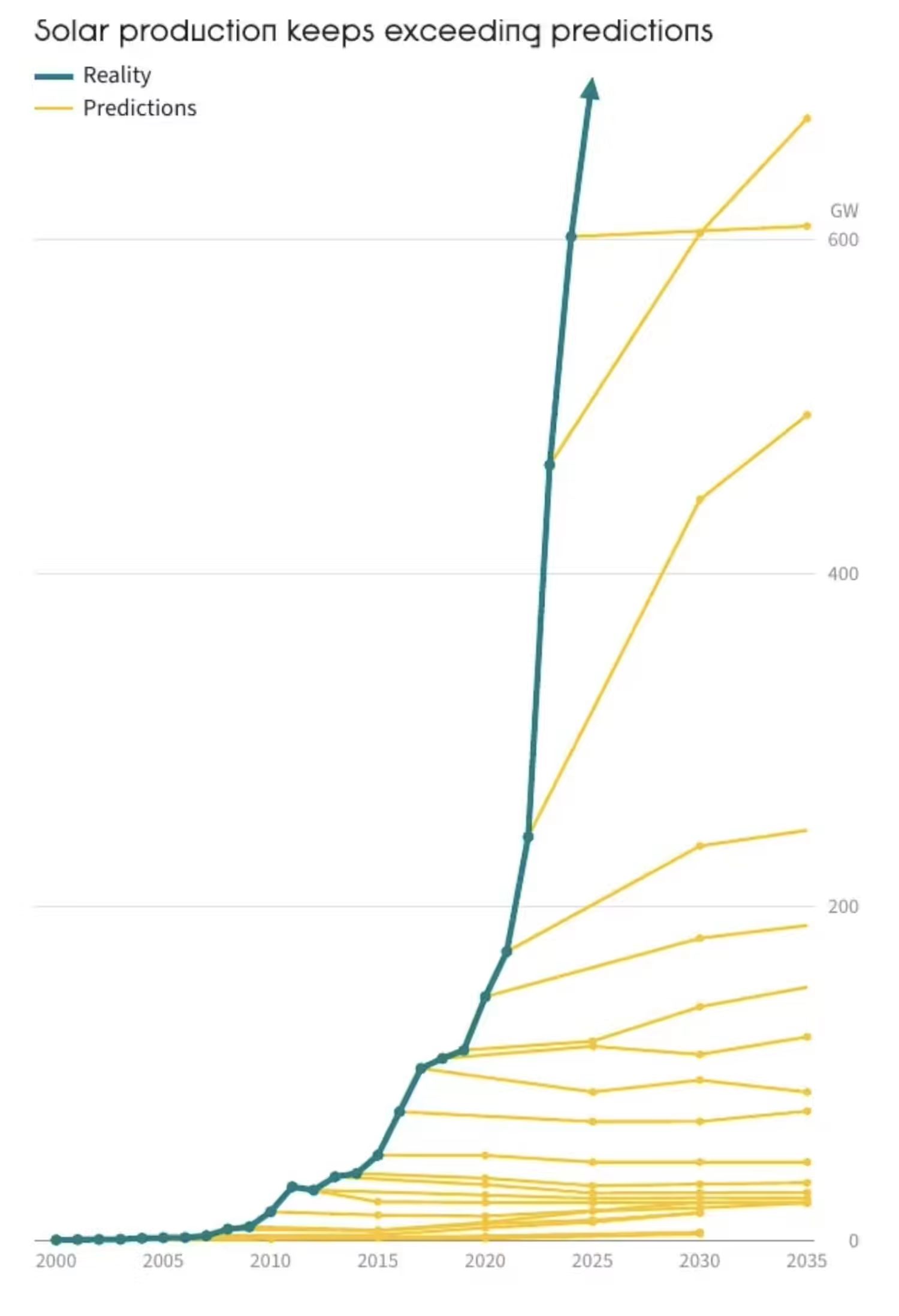
Its almost like solar panels last forever and are easy to make at scale or something.
The only thing left to do is make them affordable and efficient. ~$2 per watt is ridiculous. Solar panels need to either get better at absorbing light, or the price needs to come down.
Actual raw panel cost is way below that and has been for years. It’s the rest of the supporting infrastructure and critically the skilled labor required to install it that keeps the overall cost annoyingly sticky above $2/w
They already are affordable enough to be the cheapest source of energy in many places
Cheapest as in “over the lifecycle”, not initial investment.
They are depending on your locale cheaper than fence panels of equivalent size. So building a fence from solar is cheaper than building a fence and it generates electricity.
I recall that some asian country (I can’t remember if it was Japan or China) used recycled glass to make solar road tiles that work like chain LEDs. These were porous enough to let water seep through, yet strong enough to handle several years of being a road surface. The practical upshots of this are myriad; The dark color aids in snow melt, the tiles are easy to replace, and cheap to produce, they can have other infrastructure wired to their reverse side, such as data fibre, or even battery packs to store excess charge and most importantly, when applied at scale they are both the the power generator and distribution network combined. There was even talk of making them piezoelectric, so that traffic driving over them would also generate useable current.
Fucking solar roadways… when will this thing die?
https://interestingengineering.com/innovation/solar-roadways-engineering-failure
Hehe pffft.
However, solar railways have some potential: https://www.startupselfie.net/2024/10/10/sun-ways-between-rail-track-solar-panels/
Perovskites is the answer rn, there are several perovskite products from Poland.