The current most scalable way to do that is to give cities a budget to plant trees everywhere they can.
I would love a $Billion in green energy research, but 1000 cities getting $Million budgets to plant thousands of trees and maintain them over the next 15 years would be better
We should start buying farms in the Califoirnia Valley where they are essentially abusing water rights - and plant massive forests. It would take a fraction of the water to accomplish this and reduce desertification. Eat some of the smog from LA & SD, give the millions of residents a desert forest to camp in, and so on. Expensive plan but one I would vote for.
Trees have a life cycle, and city trees need maintenance.
The most carbon negative thing would be to prune the trees throughout their lifetime to maximise canopy uplift and spread, which maximises ground shading. Shred the prunings and the dead trees and stuff the shreds into old decommissioned bulker ships, and sink the ships in the deep ocean, sequestering the carbon in the wood into an anoxic environment where it won’t rot.
Tree shreddings being mulched into gardens just eventually rot and decompose back into CO2 through bacterial action.
Sinking the densest logs of mature trees into the ocean would sequester that carbon for tens of thousands of years
Cutting them down after a long period is fine. The real need is cooling and CO2 reduction over the next 20 years by which society should be mostly carbon neutral.
Not that this is a bad thought, it’s great and we should do that, but it’s not enough. We essentially burned the growth of millions of years of broken down stuff as oil, and that carbon went into the atmosphere. We need to retrieve millions of years of organic growth and put it back into the ground.
I’ve seen ideas of seaweed farms with the purpose of growing them and then sinking them in the ocean depths to get them out of the cycle. I suspect something would learn to live off them though.
If we had a way to make oil from the carbon in the air directly plus an energy input, and then a way to pump that back where we got it is what we need. Maybe there could be a crop that makes this conversion somehow. Like maybe grow something to make ethanol and then convert that. Labor and energy intensive but that’s what it will take since we just used all the energy.
Allergy season would be a thing of the past. Another thing you could put in them are giant dehumidifiers (moisture farms). Filter the water and you could store it in a water tower. Then you can use that as a thermal battery/emergency clean water supply.


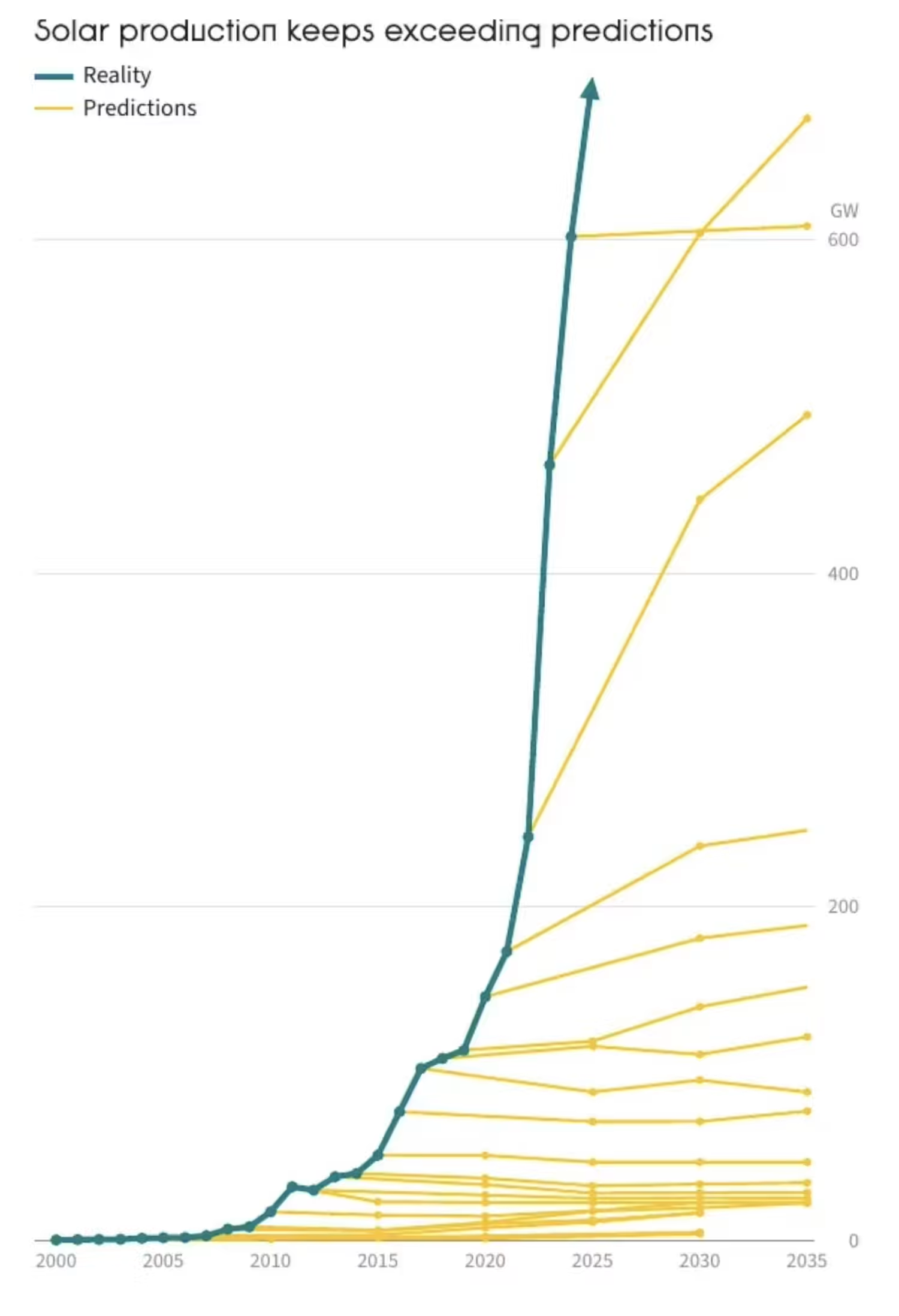
Because it was being artificialy suppressed.
Now we need to figure out how to suck emissions out of the air with it.
The current most scalable way to do that is to give cities a budget to plant trees everywhere they can.
I would love a $Billion in green energy research, but 1000 cities getting $Million budgets to plant thousands of trees and maintain them over the next 15 years would be better
We should start buying farms in the Califoirnia Valley where they are essentially abusing water rights - and plant massive forests. It would take a fraction of the water to accomplish this and reduce desertification. Eat some of the smog from LA & SD, give the millions of residents a desert forest to camp in, and so on. Expensive plan but one I would vote for.
I guess. I’m just sceptical that people will actually not cut them down later.
I want carbon dioxyde turned into something less profitable to turn into coal again.
Trees have a life cycle, and city trees need maintenance.
The most carbon negative thing would be to prune the trees throughout their lifetime to maximise canopy uplift and spread, which maximises ground shading. Shred the prunings and the dead trees and stuff the shreds into old decommissioned bulker ships, and sink the ships in the deep ocean, sequestering the carbon in the wood into an anoxic environment where it won’t rot.
Tree shreddings being mulched into gardens just eventually rot and decompose back into CO2 through bacterial action.
Sinking the densest logs of mature trees into the ocean would sequester that carbon for tens of thousands of years
In old forests most co2 is absorbed by mycelium underground. Leave a varied forest alone and it will.tale care of this process on its own.
Cutting them down after a long period is fine. The real need is cooling and CO2 reduction over the next 20 years by which society should be mostly carbon neutral.
lol
lmao
Not that this is a bad thought, it’s great and we should do that, but it’s not enough. We essentially burned the growth of millions of years of broken down stuff as oil, and that carbon went into the atmosphere. We need to retrieve millions of years of organic growth and put it back into the ground.
I’ve seen ideas of seaweed farms with the purpose of growing them and then sinking them in the ocean depths to get them out of the cycle. I suspect something would learn to live off them though.
If we had a way to make oil from the carbon in the air directly plus an energy input, and then a way to pump that back where we got it is what we need. Maybe there could be a crop that makes this conversion somehow. Like maybe grow something to make ethanol and then convert that. Labor and energy intensive but that’s what it will take since we just used all the energy.
I have it on good authority that if you filter air though the corpse of a billionaire, much of the pollutants are removed.
Build 75m tall towers in every city and fill them basement to roof with hepa filters.
Bring new meaning to the term “skyscraper”
HEPA would remove particulate but not CO2 or methane emissions, which are what drive climate change.
We’d have some clean ass air for sure though.
Allergy season would be a thing of the past. Another thing you could put in them are giant dehumidifiers (moisture farms). Filter the water and you could store it in a water tower. Then you can use that as a thermal battery/emergency clean water supply.
The key is to have something that the masses would use. Something disguised as another product, powered by renewables.
Radical, but probably expensive AF