

cross-posted from: https://feddit.org/post/29105698
cross-posted from: https://lemmy.ml/post/46526992
https://www.sciencedirect.com/science/article/abs/pii/S2095495622003485
cross-posted from: https://feddit.org/post/29105698
cross-posted from: https://lemmy.ml/post/46526992
https://www.sciencedirect.com/science/article/abs/pii/S2095495622003485
Hmm, there’s no discussion of what the energy density is compared to lithium-based battery chemistries. In articles about new battery designs, that usually means it’s pretty bad. This will have limited value if you need 10x battery volume/mass for equivalent energy storage, primarily only for grid-scale systems, which the article specifically mentions near the end:
I’m guessing these batteries are heavy and bulky compared to an equivalent LiPo. Probably safer than the molten sodium grid storage systems, so that’s good.
On the other hand, while lithium may be trading at 80x the price of iron on the market, you’re going to need a lot more iron than you would lithium for each unit of equivalent energy storage, plus it’s going to take up more space (real estate). The eventual storage system will probably be somewhat cheaper than an equivalent lithium system, but won’t fit everywhere, especially developed urban areas due to larger space requirements, and definitely won’t be 80x cheaper, even if the iron/lithium price ratio remains the same. It won’t replace lithium batteries in mobile applications (vehicles, electronics, etc) or anywhere that physical space is at a premium.
The article is written to sound overly positive about this protoype, with a sensationalized headline, while not mentioning the drawbacks, and just hoping that the reader is to too ignorant to notice.
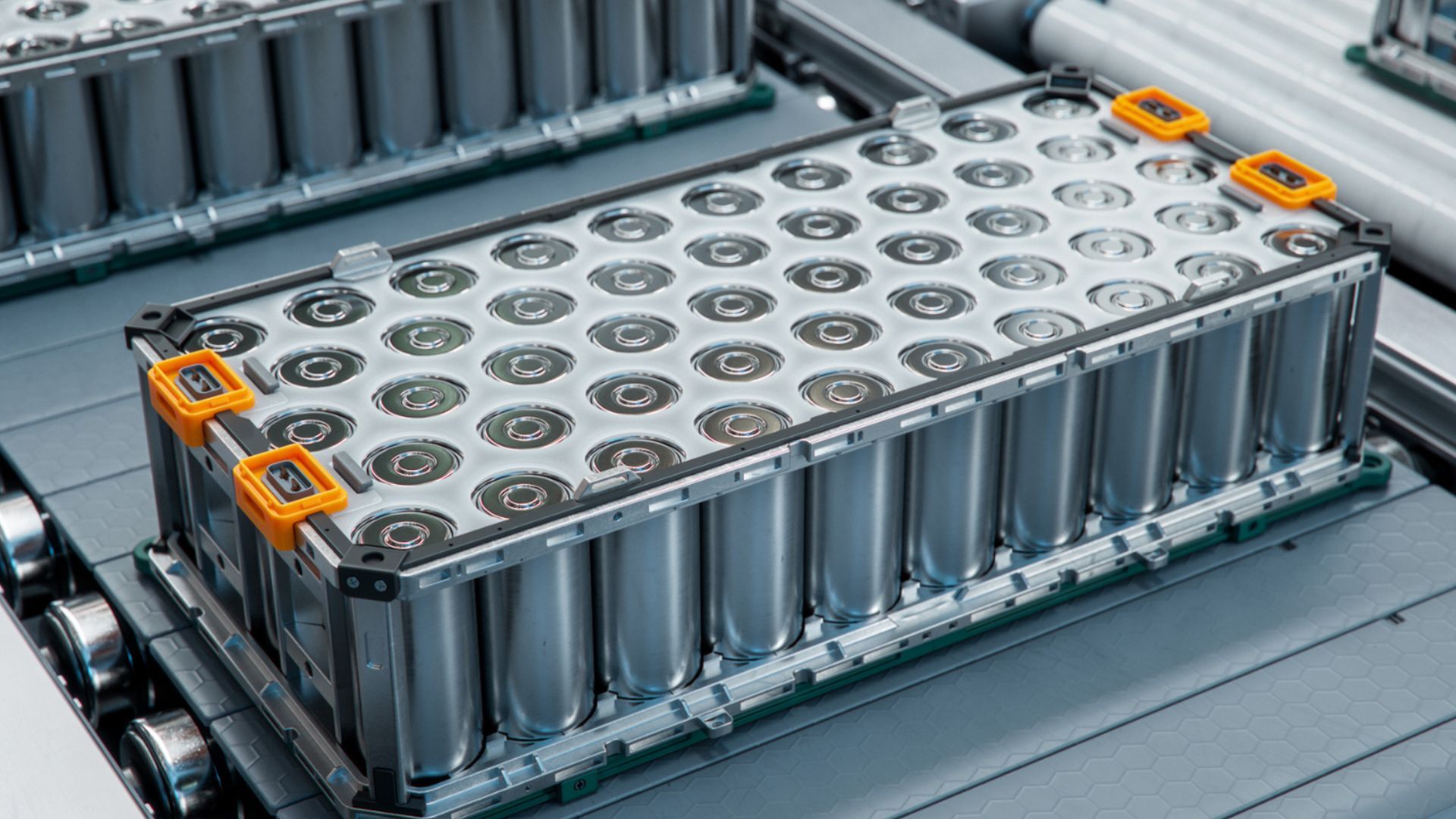
*Edit: Also, the picture attached to the article is bunk. Flow batteries require a pumping system to circulate the electrolyte fluid, which comes with a long-term.maintenance cost:
Energy density isn’t really a problem for grid-wide storage. Just build huge electrolyte tanks under the solar panels, voilà, generation and storage.
If they’re really stable, they’ll probably be placed all over the place and be a huge help in managing demand.
It won’t fit all use cases, you’ll want batteries with better density for anything mobile, but there’s definitely also a huge use case for this type of battery.
The mw scale container lithium batteries could fit at most substations for a decentralized storage system without needing much if any new land. These kind of lower density batteries wouldn’t work as well for that. They’d need more land and couldn’t go in as many places.
The main benefit of these kinds of batteries is that you mainly just need to increase storage tanks to increase capacity. So price is pretty flat compared to the linear increase for lithium ones. Above a certain size, they are cheaper. Plus ~15k charge cycles vs 1k. Easy to recycle the electrolyte. No fire hazard because it’s all disolved in water. But bigger space footprint.
Does it take more land than a solar array? What about a coal plant + its open pit mines, or a nuclear plant + its waste storage?
I have literally never heard of space even remotely being an issue for grid storage before, except in the context of pumped hydro sites. Why are people suddenly whining about how it can’t fit into a closet? Are they under the impression that this is how the grid works right now? Do they think there needs to be a gas peaker plant in every substation or else the grid collapses?
The way the grid works now with highly centralized large installations is a weakness in the system itself. A gas peaker plant takes up all that space because it needs it.
Solar arrays do take up a lot of space, and we can’t just put them anywhere.
Moving away from that into more decentralized systems will strengthen the grid overall, and that includes getting solar on our roofs as well, where we have this unused space (edit: and at places like our massive parking lots)
A big battery farm with batteries that take up a lot of space somewhere isn’t bad, but you aren’t just doing that anywhere, but you can likely drop down 4mwh container sized batteries right in the middle of cities at their substations just fine, and that will build resilience. (edit: And in this case, they already own the land, and they often have extra space)
With something like that, you could even cut yourself off from the bigger grid if something goes wrong and still provider power to those connected to the battery for a brief time.
Edit: And ya, I’m sure you could probably drop a smaller one of these in there as well, but if space is confined, you’d want to get the most out of it.
Edit: I found a picture of one up here in Canada, it’s a 8.4mwh flow battery that went live recently. It’s that building (better pics further down). That, vs 2 semi truck containers for 7.8mwh. https://invinity.com/canadas-largest-solar-powered-vanadium-flow-battery-to-be-installed-in-alberta/
That’s what plants crave!
Redox flow batteries already exist, are proven and in use as grid-storage.
The current tech appears to be mostly based on vanadium and using iron instead makes it much less problematic in case of spill and handling and more importantly cheaper to build.
Energy density is low, but is totally no issue when we talk about grid-storage solutions.
To put a number (from the linked Wikipedia article) here: iron-iron based redosx flow batteries have an average fluid energy density of 20 Wh/l.
Or in other words: you need 500 litres to save 1 kWh of electric energy.
Low price and durability (in terms of cycles) look very promising!
Energy density is not a universal concern for low cost batteries. Not every energy storage device is for a car or phone.
Sure, but as I already pointed out above, it’s very relevant for an article titled:
This is a misrepresentation of the facts. While iron may be 80x cheaper than lithium, the iron battery built with this design will not be 80x cheaper than an equivalent lithium battery, because it will require substantially more material, as well as additional mechanical complexity (liquid pumping).
You’re responding as if I’m criticizing the technology. I’m not. I’m criticizing the sensationalist writing of this article that is intentionally manipulative of the reader.
Every time I see a sensational headline like this, I wonder, what’s the catch?, because certainly I would have heard about it before it’s finalized.
Thanks for providing said catch.
In case of iron it’s inherently really, really bad due physical size of iron atoms. But that’s okay for power grid balancing and solar farm storage. And I really doubt the 80x cheaper value too - this might be cost of materials, but the end cost of battery is dominated by other things.
No.
Batteries for cars are practically solved. The next stops will be cheap home batteries, where weight and size are a lot less relevant, and batteries for ships.